

Landowners
Working with landowners
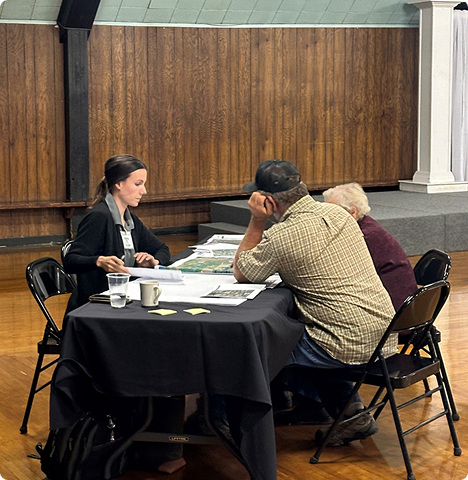
A transparent process
Those who own property along the MN PUC-approved final route will receive additional communications from the project team, including a landowner information booklet highlighting next steps, and other project specific information. Our right-of-way (ROW) agents are also in the process of reaching out to landowners, so if you haven’t been contacted yet, you’ll receive a phone call shortly from your ROW agent. We'll continue coordinating with landowners throughout construction and restoration. We're committed to keeping you involved every step of the way, and if you have questions or concerns, our project team is here to work with you!
What's next
We anticipate field surveys to ramp up in the second half of 2026. During this time, people in the area may notice increased activity associated with these surveys. This could include survey crews accessing properties, vehicles and equipment along the side of the road, and team members marking environmental or cultural features in the field. These surveys allow the project team to verify or collect new information about the selected route to refine final design components to minimize impacts from structure locations and construction of the transmission line.
Right-of-way agents will continue to coordinate with landowners and, upon request, their respective tenants, prior to and during field surveys, to make sure everyone is informed.
We expect construction to begin in Spring 2028, with the new transmission line tentatively planned for energization by the end of 2030. Our team will continue to work closely with landowners, local government officials, and other stakeholders as we prepare for construction.
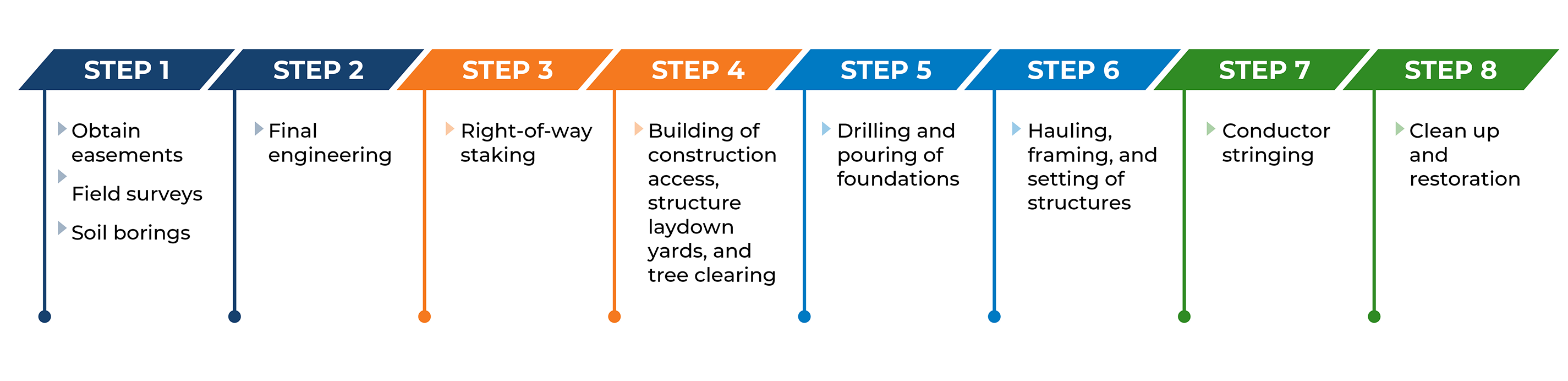
- Step 1: Obtain easements, field surveys and soil borings
- Step 2: Final engineering
- Step 3: Right-of-way staking
- Step 4: Building of construction access, structure laydown yards, and tree clearing
- Step 5: Drilling and pouring of foundations
- Step 6: Hauling, framing, and setting of structures
- Step 7: Conductor stringing
- Step 8: Clean up and restoration
As part of our commitment to landowners, we'll work with you to restore property impacted by the project or provide compensation for damage to crops, fences, or other property. Learn more in our FAQ section.
What we've been up to
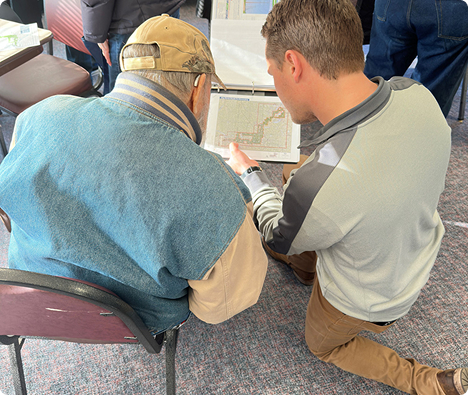
Landowner discussions
Our team has been hosting right-of-entry conversations to support required field surveys. These surveys may require access to private property to gather information about the land, including investigating areas for sensitive species, habitats, and resources, as well as other matters relevant to the project's design, construction, and operation.
Easements & structures
Otter Tail Power Company and Western Minnesota Municipal Power Agency (represented by Missouri River Energy Services) will present landowners with an easement offer. The easement is the agreement that provides the rights to access, construct, operate, and maintain the project's transmission facilities on your property. Our goal is to work closely with landowners to understand concerns and reach mutual agreements.
Typically, we'll need up to 150-foot-wide easements to safely construct, operate, and maintain the facilities. Additional temporary workspaces may also be needed for construction. Our ROW agents will work with each landowner to identify and plan for these specific needs. Learn more in our FAQ section.
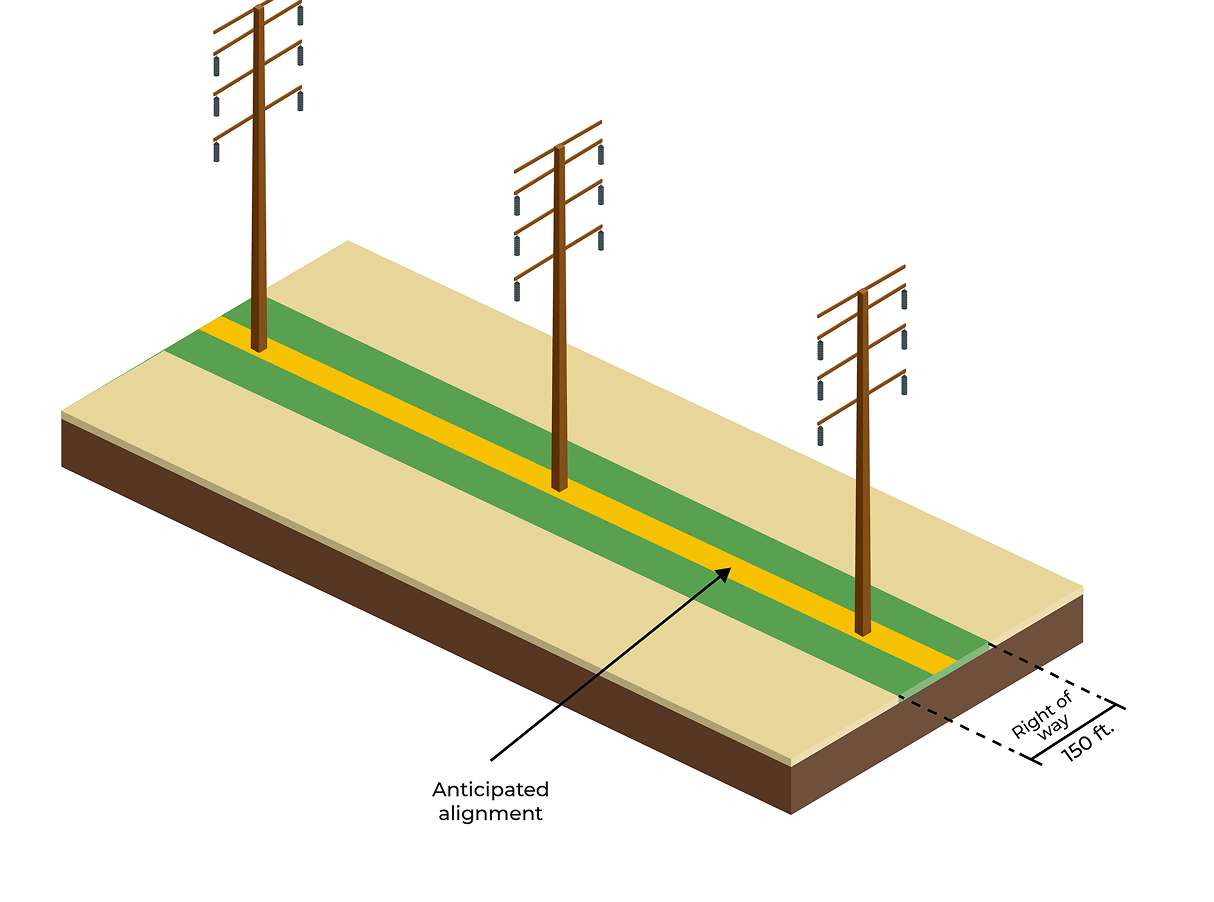
The approved route permit generally includes 1000' corridor with some widened areas for flexibility, which allows us to work with landowners to determine the least impactful placement for the poles and obtain the necessary 150' easement accordingly within that corridor. This provides greater flexibility and demonstrates the importance for landowner input.
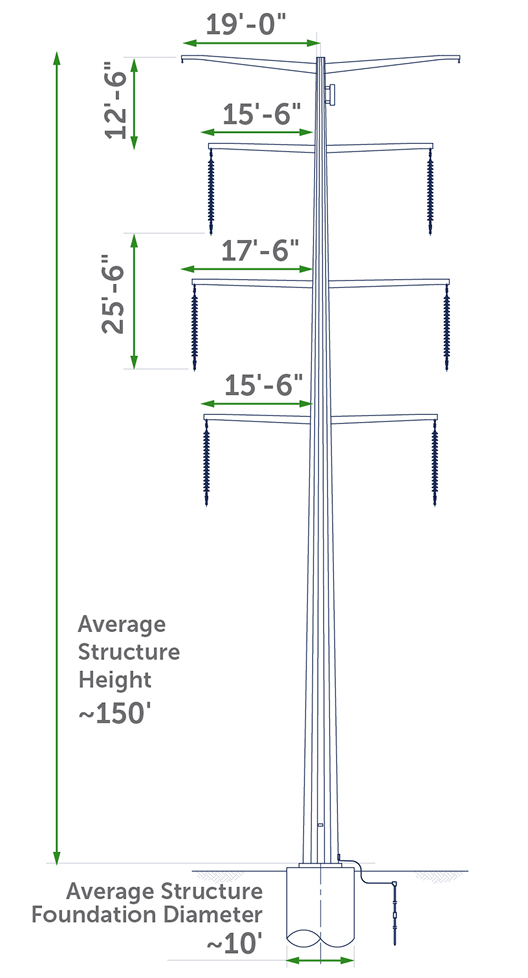
Typical monopole structures
The typical structure will be 150 feet tall. The structure type may vary across the project but primarily will be comprised of single pole, self-weathering steel with double circuit capability.
Otter Tail Power Company and Missouri River Energy Services will only install one circuit at this time.
There will be three phases of conductors and two overhead shield wires — one will be an optical ground wire (OPGW) and the other stranded steel (overhead ground wire).
These images are for illustrative purposes only and are not to scale.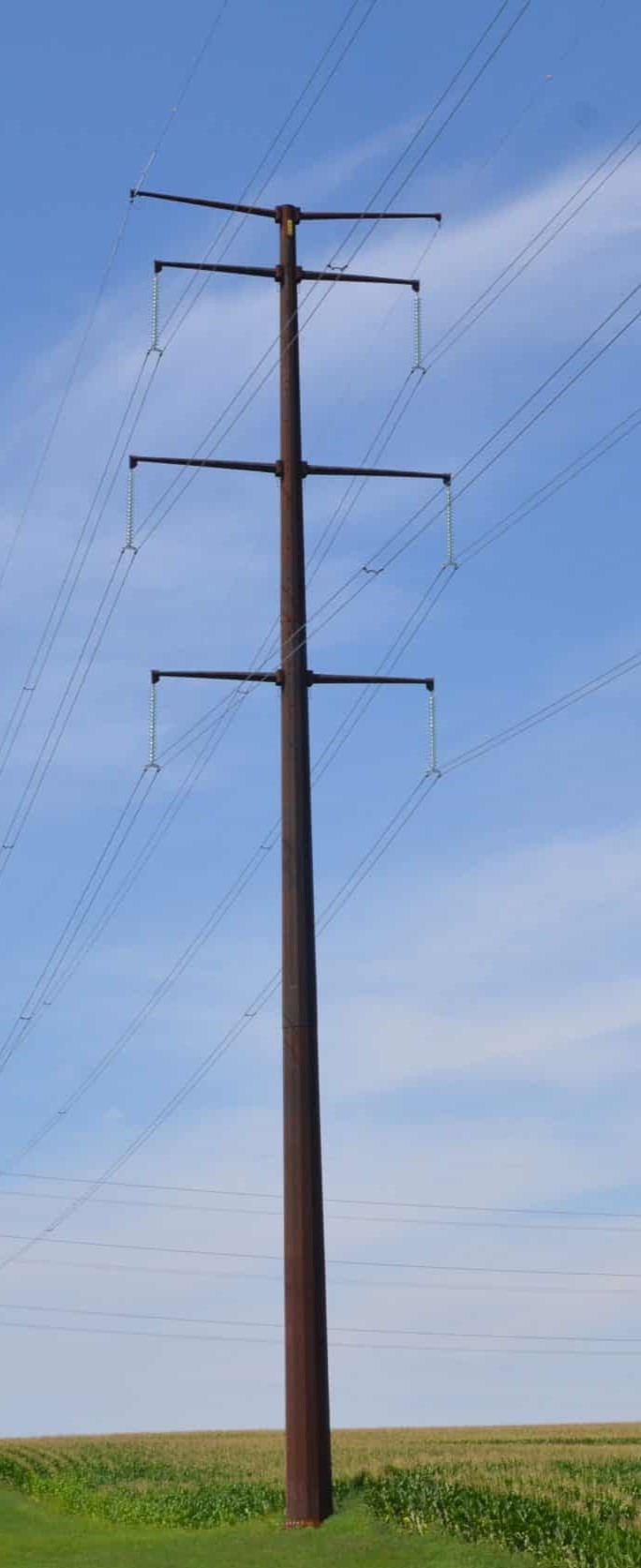
Example of a similar double-circuit structure.
Landowner resources
Frequently asked questions
Those who own property along the MN PUC-approved route will receive additional communications from the project team, including a landowner information booklet highlighting next steps, and other project specific information. Our right-of-way (ROW) agents are also in the process of reaching out to landowners, so if you haven’t been contacted yet, you’ll receive a phone call shortly from your ROW agent.
Easement compensation is based on market studies that reflect the fair market value of land, taking into account land type (e.g., agricultural, commercial) at different areas along the route. Once compensation for an easement is determined, and the project receives an executed agreement, landowners will receive payment from the project.
Yes. If crops, fences, or other property are damaged during construction or future maintenance activities, landowners will be compensated or we'll perform any necessary repairs. Working with the landowner on a case-by-case basis, we'll conduct a damages assessment and provide compensation.
Buildings, structures, wells, trees, other above-ground permanent objects, and flammables are examples of things not allowed within easement areas to ensure the safe construction, operation, and maintenance of the transmission facilities. Landowners may continue to use the easement property as long as the use does not threaten to interfere with or endanger the facilities or people in and around the facilities. Our ROW agents are happy to discuss what is and isn't allowed within the easement area if landowners have specific questions.
Any construction areas and temporary access roads that are not needed for ongoing operation and maintenance of the new transmission line will be restored to their previous condition, to the extent possible. The project team will work with each landowner regarding particular issues. Construction materials will also be removed.
The MN PUC requires reclamation, fertilization, and reseeding to be done according to Natural Resources Conservation Service recommendations. Any landowner requests that deviate from these recommendations will require the project to first get approval from the MN PUC.
Once the facility is operational, maintenance crews will periodically inspect, repair, and maintain the facilities. After the project installation, any subsequent maintenance that may cause crop or property damage will be settled promptly per the terms of the easement agreement.
Easements are perpetual and are not subject to termination or expiration. Once an easement is signed, it becomes part of the property record. The utility, the landowner who signed the easement, and all future owners of the property are bound by the terms of the easement agreement. The utility can, at some point, choose to release the easement rights if it removes the transmission line and abandons the right-of-way.
We will clear trees and tree-like or shrubby vegetation and may remove buildings within the 150-foot-wide right-of-way to ensure safety. We’ll also trim or remove danger trees, or trees outside the right-of-way that lean toward the right-of-way or are tall enough to pose danger to the line, to reduce potential damage caused by falling limbs or trees. We follow all federal and state regulation requirements.
The information on this page is intended for general purposes only and is not intended as legal advice. Circumstances may vary for each landowner and property.
Library & FAQs
Download project and permitting documents and find answers in our FAQ section.
Learn more Learn more